
by J. Jennings Moss
Originally published January 14, 2021 in the Silicon Valley Business Journal.
Before I was a business journalist, I was a political reporter. Early in my career, I spent eight years in our nation’s capital, half of it covering Congress full time. To this day, it remains my favorite reporting assignment.
I relished the political machinations, how you had 535 individual power centers in play. On top of that, you had all of the committees and subcommittees, where most of the policy debates played out. And then, of course, there was the gamesmanship of the political parties.
And I got a thrill by being able to walk up to a senator or representative to find out what was going on, get a quote for a story or deepen a source relationship. For most of my time in D.C., I worked for the Washington Times — which then, and still today, has a reputation as being archly conservative. I had one very liberal member of Congress from the Northeast, refuse to answer a question I posed to him by saying “your newspaper is an odious piece of s***.” I had one very conservative senator from the South stop in mid-sentence as we walked and talked to recommend I get a different pair of shoes. He thought mine would end up damaging my feet on the hard marble floors.
But maybe most of all, I loved where I went to work: the Capitol Building. I felt awe every day I walked into the place. I got an adrenaline kick when there was a big vote, or a bigger political fight. I didn’t mind for a moment my workspace in the Senate press gallery, which was only slightly wider than the chair I sat in.
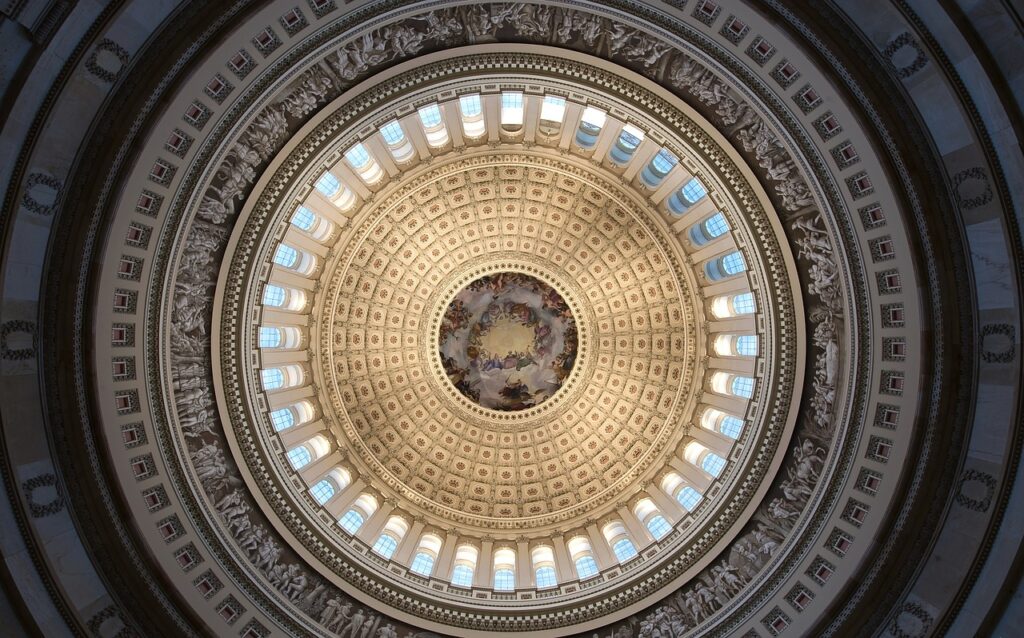
One late night, as both houses were working on something important — 30 years later, I just can’t remember what — I had to walk from the House to the Senate through the Rotunda. There was a loud storm outside, and I couldn’t just hear the rain hitting the dome, I saw water cascade down in a couple of spots to be collected in buckets. It was literally a dark and stormy night. And I was all alone in that amazing round room.
Unfortunately, we all now have a new, shared memory of a Capitol under siege as radicalized supporters of President Trump tromped through the Rotunda as they invaded so many other corners of that majestic building. It’s a testament to our democracy that just hours after the marauders were pushed out, that Congress returned to work to certify the election of Joe Biden as the 46th president.
Politically and legally, what happened in Washington, D.C., on Jan. 6 will linger a long, long time. But perhaps more than any other political crisis the nation has faced, the business community — especially the one right here in Silicon Valley — will play a pivotal role as the people behind some of the best known companies in the country decide who deserves to have a voice, who should get financial backing and who should keep a career.
Here are a few things I believe to be true:
- Private giant media companies like Facebook and Twitter are not bound by the First Amendment when they decide to kick someone off their platforms. But they do have to answer to shareholders, directors and employees.
- CEOs of tech startups can decide who they want to be in business with, and can fire a customer or a client pretty much at will. They just need to make sure their contracts are in order.
- Social media is a huge reason why there’s so much political polarization in the county. We used to have shared truths, but that’s a quaint idea when you can find endless validation for what you already believe.
- The bipartisan, antitrust caucus in Washington will only grow larger. Lawmakers may love their tech products, but they are deeply mistrustful of the companies that make them.
Now, here’s what I don’t know:
- At what point do the tech titans go too far when they decide to yank someone’s tweeting or posting privileges? On that same path, who is the ultimate decider in each company for making that decision?
- Where’s the line between making a principled decision in ending a business relationship with an outright attempt to drive someone out of business?
- Will the tech giants — who control the most valuable and among the most well-known brands in the world — readjust their practices and rethink their structures before Washington forces them to do so?
- And, maybe the biggest question I’ve got, where does this all end? Does this become a “cancel culture” frenzy from all sides, or can policymakers, politicians and business leaders find a way to step back and calm down.
The nation isn’t just watching Washington and its elected political leaders. It’s closely tracking what’s happening in Silicon Valley. So should we.